Body Awareness, Relaxation and Small Ways to Feel More Settled

A lot of people think relaxation should be easy.
You sit down. You breathe. You relax.
Lovely. Except sometimes, that isn’t what happens.
Sometimes you sit down and your mind gets louder. Your body feels restless. You notice tension you’d been ignoring all day. You suddenly remember twelve things you forgot to do. Then, instead of feeling calm, you end up thinking, “Why can’t I relax properly?”
If that sounds familiar, you’re not doing anything wrong.
Relaxation isn’t always instant. Body awareness can take practice. Feeling settled can depend on more than having a quiet room, a spare hour or a nice candle burning in the background.
Sometimes your body needs time to remember what calm feels like.
What body awareness actually means
Body awareness simply means noticing what’s happening in your body.
Not judging it. Not fixing it straight away. Not turning it into another project you have to get right.
Just noticing.
You might notice your breathing. You might realise your shoulders are tense, your jaw is tight or your hands are gripping your phone while you’re reading emails. You might notice warmth, coolness, heaviness in your legs, butterflies in your stomach or tiredness sitting behind your eyes.
You might also notice that your body responds differently around certain people, places or situations.
That’s useful information.
Body awareness doesn’t have to be deep or complicated. It might be as simple as realising you’re thirsty. It might be noticing you’ve been holding your breath. It might be understanding that your body needs a slower day, even if your to-do list has other ideas.
This matters because so many of us have got used to overriding the body.
We push through tiredness. We ignore tension. We stay busy. We keep going. We tell ourselves we’re fine.
Until we’re not.
Body awareness gives you a way to check in before your body has to shout.
Why relaxation can feel uncomfortable at first
If you find it hard to relax, you’re not failing.
For some people, relaxation feels unfamiliar. For others, it can feel irritating, emotional or strangely vulnerable.
There can be lots of reasons for this. Maybe you’re used to being busy. Maybe people rely on you. Maybe your mind feels safer when it’s planning. Maybe stillness makes you notice feelings you’d rather avoid. Maybe slowing down reminds you how tired you actually are.
So when someone says, “Just relax,” your body might not immediately respond with, “Wonderful idea, let’s melt into peace.”
It might say, “Absolutely not, we’ve got things to monitor.”
Honestly, that makes sense.
If your body has spent a long time on alert, stillness can feel strange at first. That’s why relaxation often works better when it’s gentle and gradual.
You don’t have to jump from stressed to serene in ten seconds. You can begin with one breath, one pause, one small moment of quiet.
That counts.
Rest isn’t one thing
Rest doesn’t look the same for everyone.
For one person, rest might be lying down in silence. For someone else, that could feel unbearable.
Rest might be sitting in the garden with a cup of tea. It might be listening to music, walking slowly or having fewer conversations. It might be turning notifications off, lying under a blanket, being near water or doing something creative.
For some people, rest can also mean having a body-based session, being supported or letting someone else take care of something for once.
The question isn’t, “What should rest look like?”
The better question is, “What helps my body feel a little more settled?”
That answer might change from day to day. And that’s fine.
You’re allowed to need different things at different times.
How your environment can affect how settled you feel
Your surroundings matter.
Most of us know this, but we underestimate it.
A noisy, cluttered or rushed environment can make it harder to feel calm. A softer, quieter space may help your body settle more easily.
This doesn’t mean your home needs to look like a spa. Real life has laundry, dishes, pets, family, work and random piles of things that nobody seems to own.
But small changes can help.
You might notice a difference if you lower harsh lighting, reduce background noise, open a window or clear one small surface. You might feel calmer using a blanket or cushion, moving away from your phone or sitting somewhere that feels safe.
Sometimes, even giving yourself ten minutes without being needed can change the whole feel of your day.
Your body is constantly receiving information from your environment. Noise, light, temperature, smell, clutter and pace can all affect how settled or unsettled you feel.
Small adjustments can make a real difference.
And if you’re in Bath, you’ll probably know this already in your bones. A quiet corner, a walk near green space or five minutes away from the city noise can feel completely different to sitting in the middle of a packed day.
Small ways to create more calm in your day
You don’t need to overhaul your entire life to begin feeling more grounded.
Start smaller.
Almost annoyingly small.
Before you pick up your phone, take one breath and ask yourself, “Do I actually have capacity for this right now?” Sometimes the answer will be yes. Sometimes it’ll be no. That tiny moment of choice matters.
You can also start with your jaw. Jaw tension is common when you’re stressed or concentrating. Let your tongue soften. Drop your shoulders. Loosen your hands. These tiny physical shifts can help you notice how much you’ve been holding.
Another simple place to begin is your space. Don’t try to declutter the whole house. That way madness lives. Choose one small area. Your bedside table. A chair. The corner of a room. The place where you drink tea. Make one space feel easier to be in.
You can also give your body fewer decisions. Decision fatigue is real. When you’re overwhelmed, even tiny choices can feel like too much. Wear the comfortable outfit. Eat the simple meal. Repeat the routine that works. Cancel the thing that doesn’t need to happen.
Calm isn’t always candles and soft music.
Sometimes calm is fewer decisions.
If you feel overwhelmed in busy spaces, it can also help to notice your ways out to space and air. When you enter a room, notice where you could step away if you need to. That might be a garden, bathroom, quiet hallway, parked car or simply a chair away from the noise.
Knowing you’ve got a way out can help your body feel less trapped.
And please remember this; you don’t have to rest beautifully.
You can rest with washing on the floor. You can rest with unanswered messages. You can rest for seven minutes. You can rest badly and still benefit from stopping.
Don’t turn rest into another standard you have to meet.
That defeats the whole point.
A simple daily body check-in
Once a day, try asking yourself a few gentle questions.
What feels tense?
What feels tired?
What feels heavy?
What feels okay?
What do I need less of today?
What do I need more of today?
You don’t need perfect answers.
The practice is in asking.
Over time, these small check-ins can help you notice your body sooner, before tension, tiredness or overwhelm get louder.
Where Spinal Flow fits
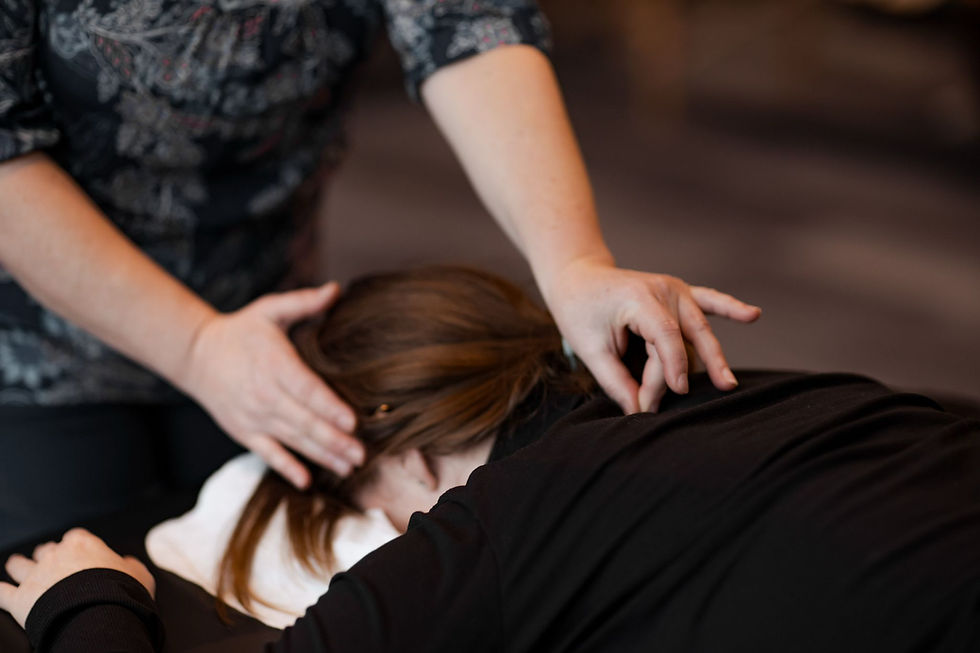
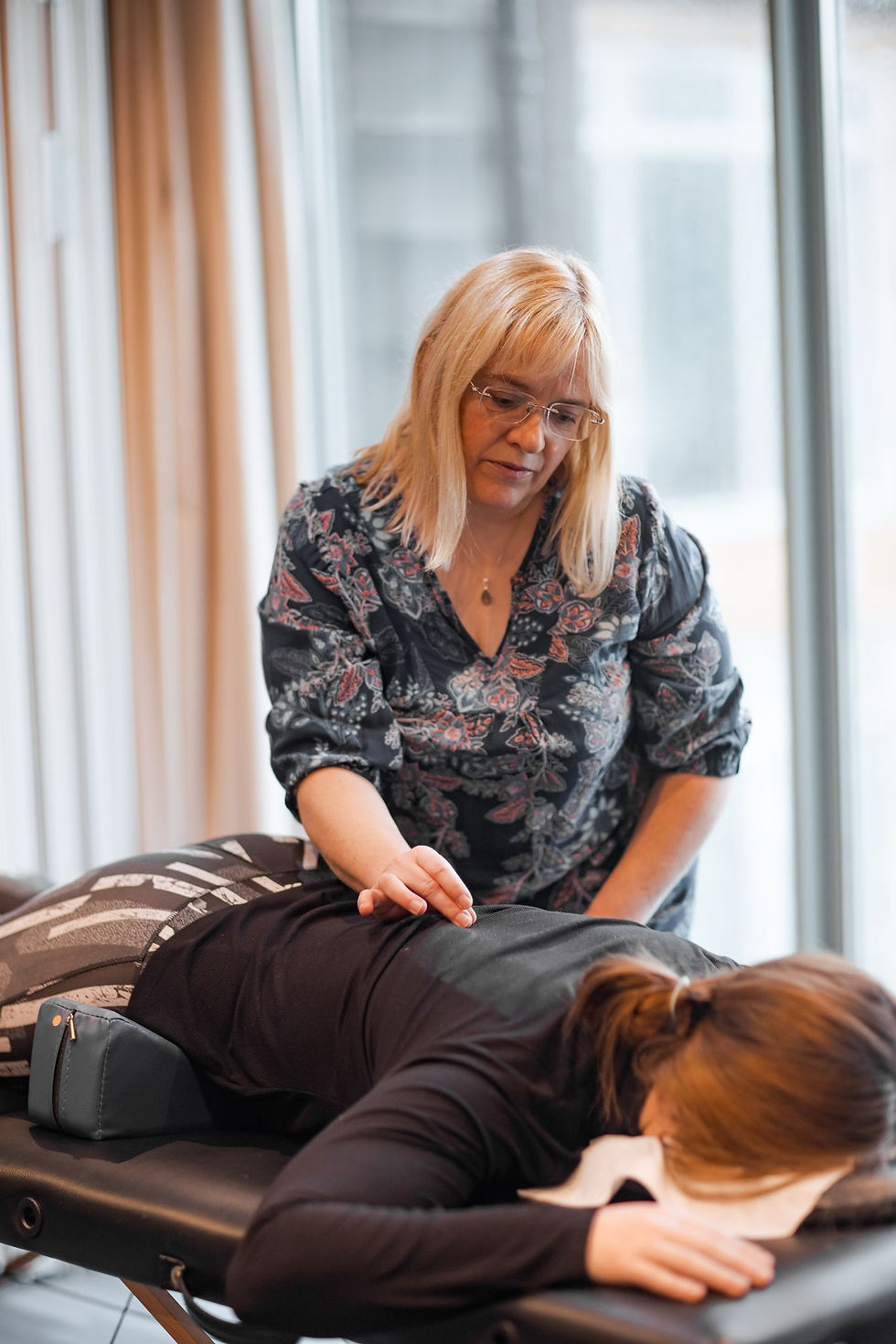
Spinal Flow can offer a quiet, supportive space to reconnect with your body.
You stay fully clothed. The touch is gentle. You don’t need to talk through every detail of your life. You don’t need to force yourself to relax.
It’s a complementary wellbeing practice, for people who want gentle body-based support. It can be a helpful space to pause and notice what the body is holding.
Sometimes that’s where change begins.
Not with force.
Not with pressure.
Not with another thing to achieve.
With awareness.
A softer way forward
If relaxation feels uncomfortable, go gently.
If body awareness feels unfamiliar, start small.
If your environment feels too much, change one thing.
If your body feels unsettled, don’t shame it for asking for support.
You’re allowed to need quiet.
You’re allowed to need space.
You’re allowed to need a slower pace.
You’re allowed to begin again.
If you’re curious about Spinal Flow and would like to explore gentle body-based support here in Bath, you’re very welcome to book a session with Jules or send a message first.
Comments